

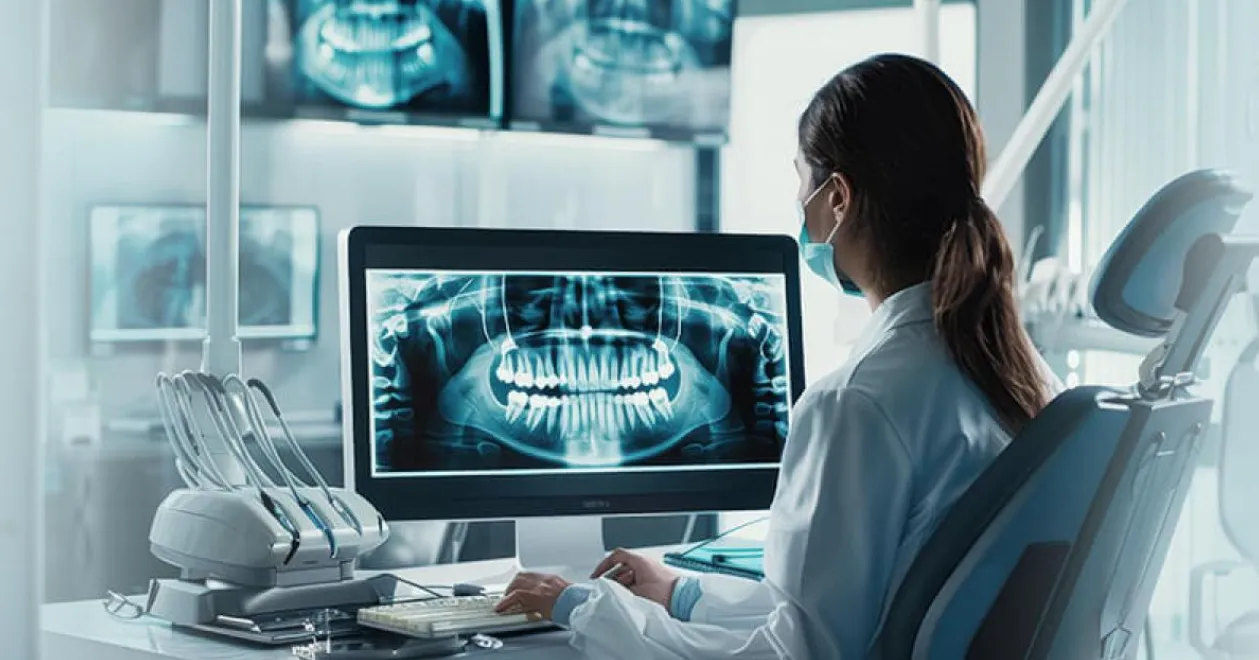
You might be feeling pulled in a few directions at once. One dentist has part of your history, a specialist has another piece, and every time you fill out yet another clipboard of forms, you wonder why no one seems to have the full story of your mouth. An Englewood Cliffs dentist can help unify your care so you feel more supported. It can feel scattered and unsafe, especially if you are dealing with ongoing treatment, medical conditions, or anxiety about dental care.end
Because of this tension, you might also be wondering whether modern technology actually helps, or if it just creates new problems. The short answer is that when a dental center uses digital records well, your care becomes more connected, safer, and easier to manage. Your story does not get lost between visits. Your dentists and specialists can see the same, accurate picture of your health.
This is what digital dental records for continuity of care are really about. They are not just files on a screen. They are a way to keep your history, your treatment plans, your x rays, and your preferences in one place so every decision is based on what has already happened, not on guesswork.
Why does dental history feel so scattered in the first place?
Think about your own experience. Maybe you started with a childhood dentist, then moved for work, then needed a root canal with an endodontist, then saw an oral surgeon for wisdom teeth. Each visit involved new forms and the same questions. What medications are you taking. Any allergies. Any past dental work.
On paper, this old way made sense. Every office kept its own chart. The problem is that life is not that neat. Records are misplaced, handwriting is hard to read, or x rays do not transfer easily. If you have a medical condition like diabetes, a heart issue, or severe dental anxiety, those missing details can affect the safety of your care and the choices your dentist makes.
Emotionally, this feels tiring. You may feel like you have to be the project manager of your own mouth. You carry old x rays in folders, you repeat stories about that one painful procedure years ago, and you hope the new dentist understands the full picture.
Financially, scattered records can mean repeat x rays you might not have needed, extra appointments to “figure things out,” or treatment plans that change after new information appears. That is not only frustrating. It can be expensive.
So where does that leave you. It leaves you stuck between wanting consistent care and feeling that the system is not built to remember who you are over time. This is exactly the gap that well used electronic dental records are meant to close.
How do digital records actually improve your continuity of care?
Digital records are not just scanned paper charts. They are structured, searchable, and shareable when needed. According to the American Dental Association, modern digital dentistry and record systems can include images, treatment notes, medical alerts, and even communication logs in one secure file.
Imagine this “what if” scenario. You are in the middle of a complex treatment plan. Your general dentist places a crown, then refers you to a periodontist for gum concerns. With old paper charts, the periodontist might receive a short letter and a single x ray. With digital records, the periodontist can see your full history, your latest images, your medical alerts, and even your anxiety notes. They know that injections are hard for you, or that you prefer extra explanation before a procedure. That context changes the experience for you.
Here are some specific ways a modern dental center uses digital records to keep your care continuous and safer over time.
1. Your history follows you, not your paper chart
Digital records allow your dental team to see earlier notes, x rays, and treatment plans at a glance. If you had a root canal ten years ago, the dentist can see which tooth, which material, and how it has looked over time. This helps them spot patterns. It also means fewer surprises during treatment.
2. Different providers can coordinate in real time
If you need a referral, your general dentist can share relevant parts of your record with a specialist quickly and securely. That means less waiting, fewer repeated questions, and more informed decisions. Your medical doctor can also be kept in the loop when there are concerns about medications, blood thinners, or other conditions.
3. Treatment planning becomes clearer and more consistent
Digital systems allow your dentist to map out your treatment over time. They can track what has been completed, what is urgent, and what can wait. If you need to pause care for financial reasons, your plan is still there when you are ready. You are not starting from scratch every time you return.
4. Emergencies are handled with more context
If you show up with sudden pain or a broken tooth, your dentist can pull up your full record instantly. They can see past sensitivities, existing work on that tooth, and earlier x rays. This reduces guesswork and lowers the chance of repeating something that did not work well for you before.
5. You have clearer access to your own information
Many modern systems allow you to request copies of your records or send them to another provider more easily. The American Dental Association explains that your dental records are part of your health story and you have rights related to them. When they are digital, it is simply more practical to exercise those rights.
What are the tradeoffs of digital records in dental centers?
With any change, there are questions. You might worry about privacy, mistakes in your file, or what happens if systems go down. Those concerns are reasonable. The key is to compare how digital records affect your day to day care compared with old paper charts or disconnected systems.
| Aspect | Paper or Fragmented Records | Digital Records in a Dental Center |
|---|---|---|
| Access to your history | Slow. Depends on finding the right folder or sending copies by mail or fax. | Fast. Your dentist can search and view your record in seconds. |
| Coordination between providers | Inconsistent. Relies on letters, phone calls, or physical x rays. | More reliable. Relevant data and images can be shared securely when needed. |
| Risk of missing information | Higher. Charts can be incomplete, damaged, or hard to read. | Lower. Information is stored in a structured way and backed up. |
| Privacy and security | Paper can be misplaced or seen by the wrong person. | Protected through logins, encryption, and access logs, though still requires good office practices. |
| Continuity of care over many years | Harder. Records can be archived or lost when you move. | Easier. Long term trends and images stay connected to your file. |
So where does that leave you as a patient who just wants consistent, kind care. It means that when a dental center uses electronic health records in dentistry thoughtfully, your story is less likely to fall through the cracks. The technology is not perfect, and people still need to use it well, but it gives your providers better tools to see and support you over time.
Three practical steps you can take right now
1. Ask your dental center how they use digital records
You do not need technical language. Simple questions are enough. Do you use digital records for all patients. How do you share information with specialists. How do you protect my privacy. The way they answer will tell you a lot about how seriously they take continuity of care and your trust.
2. Keep your own “snapshot” of key information
Even with strong systems, it helps to have your own summary. Keep a short list of your major dental treatments, allergies, and medications. Ask for copies of important x rays or reports if that makes you feel safer. This does not replace digital records, but it gives you a quick reference and something to offer if you see a new provider.
3. Speak up when something in your record seems off
If you see or sense that a detail in your file is wrong, say so. Maybe a medication is outdated or an allergy is missing. Correcting small errors now protects you later. A good dental center will welcome that feedback, not resist it. You are not being difficult. You are taking care of your health story.
Moving toward steadier, more connected dental care
You are not wrong to feel tired of repeating yourself or worried that no one has the full picture of your dental health. That frustration comes from real gaps in how care used to be managed. The shift to digital dental care systems is not about gadgets. It is about giving your dentists and specialists a clearer, shared understanding of who you are and what you have been through.
When your records are accurate, secure, and shared wisely, every visit builds on the last one. You spend less time filling out forms and more time having real conversations about what matters to you. You are not just a set of teeth in a chair. You are a person with a story that deserves to be remembered every time you walk through the door.

Emma Brooke is a passionate language enthusiast and expert at Grammar Apex, dedicated to helping writers, students, and professionals refine their grammar and writing skills. With a keen eye for detail and a love for linguistic precision, Emma provides insightful tips, clear explanations, and practical guidance to make complex grammar rules easy to understand.