

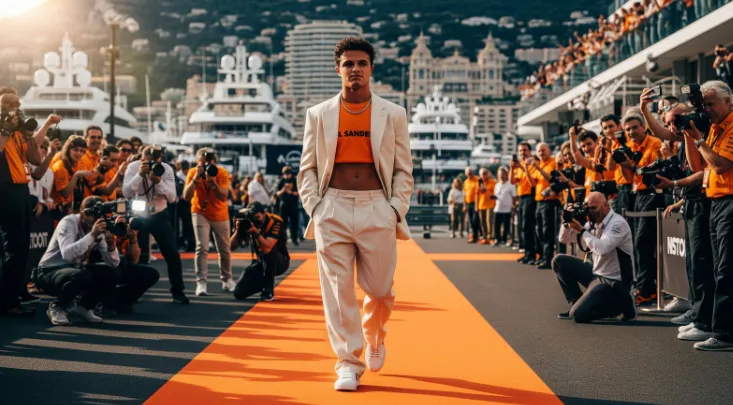
In modern motorsport, the link between driver identity and fashion is no longer a side topic; it sits at the center of how the sport presents itself. The way a driver’s character shows up in their clothing creates a strong connection between the strict, technical side of racing and the lifestyle dreams of fans around the world.
Drivers are no longer just athletes taking corners at 300kph; they are also global style figures whose paddock arrivals are watched and discussed as closely as a new car livery. This mix of speed and style has turned the paddock into a kind of quiet runway, where personal branding comes through sharp suits, high-end streetwear, and luxury brand tie-ins.
Going into the 2026 season, the “Netflix effect” keeps making drivers feel more human and relatable, turning them into full-scale celebrities. For fans, this shift means that supporting a driver goes beyond shouting during the race on Sunday-it includes following their style and visual world.
Whether it’s the bold, risk-taking looks of long-time champions or the fresh approach of the next wave of talent, including fans chasing the latest Kimi Antonelli merch, fashion is now the main way drivers share their values, culture, and personality with millions of people.
Driver Identity and Fashion: The Connection in Modern Motorsport
Why Driver Persona Matters Beyond the Track
In today’s Formula 1 and other series, a driver’s persona is a key part of their value that goes far beyond tire management or race craft. As the sport has exploded in popularity over the last five years, drivers have moved into the center of a huge global marketing machine.
A clear and unique persona helps a driver speak to different types of fans, especially Gen Z and women, who now make up about 40% of the audience. Many of these fans are drawn more to the personal stories and drama in the paddock than to technical details like how an MGU-K works.
Creating a strong image away from the car gives drivers control over how they are seen and a creative outlet. For many, fashion is a way to “talk without words,” as Charles Leclerc has said. By building a certain look-whether it’s the smooth, polished style of a Monaco resident or the sharp, urban feel of a French fashion fan-drivers can form a group of followers who feel linked to their day-to-day life.
This kind of personal branding also acts as smart PR, making teams more attractive to luxury and lifestyle partners who want to tap into the new “cool factor” of these athletes.
The Evolution of Motorsport Fashion
The move from oil-stained overalls in the 1950s to front-row seats at Paris Fashion Week shows how the sport’s priorities have shifted. At first, racing clothes were purely practical, centered on safety.
We have gone from Juan Manuel Fangio’s plain polo shirts and work trousers to modern fireproof Nomex suits that can stand 800 degrees Celsius. The bigger change came in the 1980s and 90s, when rising sponsorship money turned drivers into rolling ad spaces, with every bit of fabric sold to brands.
Today, fashion in the paddock is far more personal. While team rules still shape “paddock style,” the walk into the circuit—the “paddock walk”—has become a fashion moment of its own. Drivers now often work with stylists like Eric McNeal or Kit Swann to plan outfits that mix big luxury names such as Dior and Valentino with newer streetwear labels. Fans looking to replicate this aesthetic can find authentic gear at topracingshop.com, as the line between the race track and the runway continues to blur.
Liberty Media’s takeover of F1 in 2017 sped this up, along with the strong influence of luxury groups, which peaked in a major 10-year deal with a leading luxury conglomerate starting in 2025.
How Motorsport Fashion Has Changed Over the Decades
Function Versus Style in Racing Apparel
In the past, safety needs far outweighed style concerns. In the 1960s, fireproof suits became compulsory after several serious crashes, and the only real goal was to protect the driver’s life.
By the late 1970s, racers like Niki Lauda and Mario Andretti were wearing thick, five-layer suits built to NASA-like standards. These suits were heavy and stiff, built for safety above all else. Visual appeal came second, usually limited to a flag patch or a basic name label.
New materials and technology have allowed style to catch up. Modern race suits are lighter, cooler, and more fitted, using advanced Nomex layers that protect without adding bulk. Branding has also shifted; instead of sewn-on patches that add weight, sponsor logos are now printed onto the fabric. This helps the suit stay sleek and aerodynamic while acting as a sharp, high-resolution surface for team colors and graphics.
Helmets have also changed from simple protective shells into personal canvases, showing a driver’s roots, humor, and personal milestones.
Branding, Sponsorship, and Commercial Influences
The 1980s were the start of a major commercial boom in racing. Bigger TV audiences made every part of a driver’s race suit more valuable. Famous liveries like the red-and-white Marlboro McLaren or the bright Benetton colors defined how fans saw the sport.
Benetton proved that a clothing company could do more than put its name on a car; it could run a title-winning team, blending the clothing business with the pit lane. In this time, drivers became corporate symbols, with their main fashion role focused on visibility for big tobacco and fuel brands.
After tobacco sponsorship began to fade in 2006, the sponsor mix changed. Luxury watchmakers like Rolex and TAG Heuer became more prominent, followed by a wave of fashion-focused partners. Labels such as Tommy Hilfiger, Boss, and Reiss are now deeply involved with several teams.
These deals go beyond a logo on a car; they include special “Hype” drops and lifestyle clothing lines for fans. The business focus has spread from decals on the chassis to clothes in fans’ closets, turning motorsport into a broad lifestyle product.
Fashion as a Tool for Driver Self-Expression
For today’s drivers, fashion is one of the few spaces where they can stand out from the highly controlled team image. Lewis Hamilton led this shift, using the paddock walk as his personal runway with daring outfits from designers like Rick Owens and Yohji Yamamoto.
By arriving in fashion pieces instead of standard team gear, Hamilton showed he was more than just a worker for a car brand-he was an individual with his own taste and influence.
Younger drivers have followed his path. Zhou Guanyu and Pierre Gasly are often seen on the front row at fashion shows, using clothing to show that they are citizens of a global culture. Alex Albon has even created his own label, AA23, built around “easy style without compromising on comfort.” This personal style work helps drivers build a name that lives beyond results on the timing screens, keeping their appeal strong even through tough seasons.
Motorsport’s Most Influential Style Icons
James Hunt: Rebel Style on and off the Circuit
James Hunt is still the classic example of the “rebel racer.” In the 1970s, his looks matched his wild lifestyle-flashy, casual, and often unbuttoned, both literally and figuratively. With his loose hair and laid-back way of wearing his overalls, he pushed back against the strict dress norms of his time.
Whether stepping out in a sharp suit or, as some stories claim, in almost nothing at all, Hunt projected a raw, natural charm that drew in both newspapers and fashion fans.
Hunt’s strength was that he never forced his style. He didn’t rely on stylists; his clothes were a direct reflection of his fast, pleasure-driven life. He showed that a racing driver could be both a sex symbol and a cultural star, clearing the way for the celebrity driver image that exists today. His influence still shows up in “motorcore” style, which often tries to recreate the easy, cool 70s look that seemed to come so naturally to him.
Ayrton Senna: Subtle Statements and Legacy
Ayrton Senna’s approach to fashion was very different from Hunt’s loud and showy image. The Brazilian champion liked simple, relaxed clothing that still felt personal. Away from the track, he often wore colorful T-shirts and stone-washed jeans, sometimes paired with low-key racing merch that looked unmistakably his. His style matched his focused, calm personality-a quiet intensity that needed no flashy pieces to stand out.
Senna’s most famous style mark was his yellow, green, and blue helmet, a bright nod to Brazil. The design became so well-known that one original helmet sold for almost $1 million. By building his national colors into his race gear, Senna showed how drivers could use their equipment to make strong cultural statements. Even now, his impact is clear in the choices of drivers like Lewis Hamilton, who often honors Senna through his own helmet designs.
Jacques Villeneuve: Iconoclasm in Racing Fashion
In the 1990s, Jacques Villeneuve brought a rebellious edge to F1 with his bleach-blond hair and mischievous grin. The 1997 champion refused to fit the clean, corporate image many teams preferred. His slightly oversized race suits and grunge-influenced casual wear stood in sharp contrast to the cold, controlled style of rivals such as Michael Schumacher.
Villeneuve used his look to show that he was an outsider. This helped him win a loyal group of fans who felt that the sport was becoming too polished. His blunt personality and striking appearance helped him stand out during a time when sponsorship money was encouraging more uniform styles. Today, you can see his influence in drivers who experiment with their hair or outfits to keep a distinct and memorable presence.

Lewis Hamilton: Redefining Modern Motorsport Style
Sir Lewis Hamilton is widely seen as the leading style figure in current motorsport. As a seven-time World Champion, he has changed how F1 and fashion work together. Hamilton does more than just attend fashion shows; he co-chairs the Met Gala and creates clothing capsules with brands like Dior and Tommy Hilfiger. His arrival looks are so famous that many fans jokingly call race weekends “Lewis Hamilton Fashion Week.”
Hamilton’s style mixes loose, streetwear shapes with sharp, made-to-measure pieces. He often uses outfits to share messages, such as his 2025 Met Gala look by Grace Wales Bonner, which included cowrie shells as a symbol of spiritual protection in African culture.
As the first black driver in F1, his bold and varied fashion choices have helped push the sport toward greater diversity and inclusion, showing that a driver can dominate on track and still be a regular presence in global fashion and culture.
Lando Norris: Blending Streetwear with Racing Heritage
Lando Norris brings a young, relaxed style to the grid, often compared to a modern James Dean. He leans towards current streetwear, usually in muted colors like black, paired with easy bomber jackets and simple pieces. Norris has used his strong following with younger fans to start his own clothing label, Quadrant, which mixes gaming themes with racing-inspired design.
His fashion status jumped in 2025 when he appeared in a major British Vogue feature, shot at the McLaren Technology Centre. The shoot showed him in outfits ranging from cropped Jil Sander knits to big, structured Ferragamo suits, along with a nostalgic shot by Ayrton Senna’s MP4/4. Norris is part of a new wave of drivers who feel just as at home in front of a fashion camera as they do behind the wheel, linking motorsport’s past to current style trends.
Pierre Gasly and George Russell: Emerging Fashion Leaders
Pierre Gasly and George Russell show two very different but equally strong paths in driver fashion. Gasly, who works closely with Dior and Givenchy, leans into a modern, slightly edgy look that mixes city streetwear with high luxury. He is often seen in the front rows at Paris shows and is known for polished outfits at events like the Cannes Film Festival.
George Russell, by comparison, goes for a classic British “preppy” feel. His wardrobe is full of fitted suits, straight-cut chinos, and simple designs in neutral shades. Russell’s style focuses on quiet, clean lines and refined taste, fitting his image as a key figure at Mercedes. Gasly brings a more daring vibe, while Russell shows the calm, composed side of the modern European driver, highlighting how much range there is in grid fashion today.
Drivers as New-Generation Style Influencers
When Fashion Meets the Paddock
The paddock has shifted from being just a technical space for teams into a cultural stage. The visual impact of the paddock walk has grown fast, and teams now know that a single striking outfit photo can generate more Earned Media Value (EMV) than long TV coverage of a practice session. In 2023 alone, F1 helped drive a 35% rise in EMV for fashion brands, making it one of the fastest-growing sports for fashion interest.
This link has led to a more structured approach to driver style. Some teams, like Mercedes, have hired staff specifically to manage clothing and image for their drivers away from the cockpit. When a driver such as Charles Leclerc or Lewis Hamilton strides into the hospitality area, they are sending a clear message about how their team mixes racing heritage with high-end lifestyle. The moment of arrival has become part of the standard race weekend show, just like the pre-race anthem.
Social Media and the Rise of Personal Branding
Social media has been the main driver behind the rise of the driver as influencer. Platforms like Instagram and TikTok let fans track every outfit through official accounts, photo agencies, and fan pages dedicated just to driver looks.
With more than 40 million followers, Lewis Hamilton reaches as many people as some major movie stars. This direct access lets drivers build personal audiences that often outsize their team’s own following.
Netflix’s Drive to Survive boosted this even more by showing the people behind the helmets. By revealing home lives, travel routines, and luxury experiences, the series set the stage for fashion brands to step in. Drivers are no longer only the quickest people on track; they are now treated like pop stars, with each clothing choice turning into content for a worldwide, online-first fan base.
Impact on Fan Culture and Motorsport Audiences
The meeting of fashion and motorsport has changed how fans look and dress. “Motorcore” outfits are now common, with many fans-especially women and Gen Z-wearing racing-inspired clothes, from vintage Ferrari jackets to custom Red Bull pieces. This shift in style has caused some arguments with traditional supporters who think official gear should be worn only by fans who fully understand the sport, but sales numbers show that this new group is driving record revenue.
The growth in female fans has pushed brands to create more women-focused items. Reiss, for example, has launched “Hype” ranges for McLaren that include trend-led streetwear and flowing two-piece sets aimed at women who care about fashion as much as racing. As motorsport keeps modernizing, the expectation that drivers will look stylish will rise as well. Teams that appeal to younger audiences with up-to-date clothing are likely to gain more supporters and partner deals.
Cultural Heritage and Identity in Driver Fashion
Italian Heritage, Rosso Corsa, and Racing Aesthetics
Ferrari is the clearest example of how cultural history and fashion meet in racing. At the center is rosso corsa, or “racing red.” First used as Italy’s national racing color in the early 1900s, Ferrari has turned this shade into a lasting symbol. Much like the “little black dress” in fashion, Ferrari red is instantly linked with passion, speed, and Italian style.
Ferrari acts as much like a design studio as it does a race team. Led by Rocco Iannone, the company launched “Ferrari Style” in 2021, a luxury clothing line that shows at Milan Fashion Week. The pieces draw on the flowing curves of Ferrari cars and the boxy shapes of team uniforms. By mixing pure performance with high fashion, Ferrari makes sure its drivers, like Charles Leclerc, represent Italian luxury every time they walk into the paddock.
Representing National Identity Through Style Choices
Many drivers use clothes to express where they come from. Charles Leclerc’s preference for simple, sharp tailoring and light, easy outfits reflects his life in Monaco and the warm Mediterranean climate. George Russell’s “British preppy” style, with chinos and polo shirts, nods to his English background and the long history of British elegance.
Designers also use motorsport to echo local culture. Punn Viravaidhya, for instance, builds collections around Japanese race car scenes. He uses materials like seat fabric and reflective strips in outfits inspired by traditional Japanese workwear such as samue and tobi trousers. In smaller details-like a tartan band on a helmet or a fabric linked to a home region-fashion gives drivers a way to carry a bit of home with them to every race.
Racing Gear: From Functionality to Fashion Statement
Visual Storytelling with Racing Suits and Helmets
Race suits and helmets have become some of the most visible ad spaces in sport, but they also tell stories. Special helmets let drivers show who they are or honor people they admire. Sebastian Vettel’s 2024 Imola helmet paid a moving tribute to Ayrton Senna, while Carlos Sainz once ran with a sticker of “Sparkles” the unicorn on his car, drawn by a young fan named Thea during the Azerbaijan Grand Prix.
These choices build emotional links with fans. When Lewis Hamilton’s clothing palette shifted from white to Ferrari red at the end of his time with Mercedes, it was a clever use of color to hint at his next move without saying anything publicly. Each logo, patch, and line of paint on a driver’s gear plays a role in telling a story, turning safety items into bold style statements.
Motorsport Apparel as the ‘Fastest Billboards’
Modern race gear has to meet both sponsor needs and performance targets. In the 1980s, race suits were covered in thick, stitched-on patches that added real weight. Today, the “walking billboard” has gone high-tech, with printed logos that keep the fabric light. This attention to detail helps drivers stay quick while still honoring the large sponsor contracts attached to their gear.
The growing involvement of luxury groups has pushed this further. With Louis Vuitton as an official partner, we now see branded trophy trunks and even race title deals, such as the 2025 Australian Grand Prix. The ad space has grown from the driver’s chest to the whole race setting, blending fast competition with high-end branding at every turn.
The Role of Fashion Designers and Brands in Motorsport
Collaborations: Teamwear, Luxury Labels, and Streetwear
Recent years have brought a wave of joint projects between F1 teams and fashion labels. Mercedes has maintained a long tie-up with Tommy Hilfiger, while Alpine has partnered with streetwear label Palace and modern brand FROM FUTURE. These partnerships often lead to limited-run products that sell out quickly, showing just how strong the demand is for everyday clothing linked to motorsport.
Streetwear, in particular, fits naturally with racing. The global streetwear market, worth close to $200 billion, is built on a sense of realness and easy access, ideas that line up with how younger fans see F1. By mixing Hilfiger’s preppy style with old-school racing looks, these collaborations help fans feel closer to the life of those who take big risks on track-even if they’re just catching a subway, not a slipstream.
Motorsport Fashion in Contemporary Runways
Racing-inspired looks are now common on major catwalks. Designers like Marc Jacobs and Balenciaga have put “racer jackets” and “motorcore” pieces in their shows. Ferrari Style’s Spring/Summer 2026 runway in Milan included flowing silky suits with popped collars and sculpted dresses shaped like bodywork, showing that the brand is serious about its place in high fashion.
Shoes have also felt this shift. Puma has brought back the Speedcat, a sleek racing boot from 1999, and it has become a favorite for celebrities like Dua Lipa and Rosé. Its light, minimal design answers a new desire for simpler shoes after years of chunky “dad sneakers.” This crossover proves that the raw attraction of motorsport is a powerful resource for designers looking to bring more energy into their collections.
How Emerging Designers Are Redefining Motorsport Style
New designers are treating racing gear as a cultural sign rather than just a uniform. Punn Viravaidhya, a graduate of Istituto Marangoni, draws on his love of modified Japanese cars to make fashion pieces that merge function, speed, and identity. He uses elements like carbon fiber weaves and car cover fabrics to turn the sharp, aggressive look of race machines into clothing.
These designers are moving away from simple quick-profit sponsorship items and focusing on the deeper meanings behind the sport. By breaking down car parts and reimagining them as garments, they are reshaping what racing style can be. This fresh approach keeps the link between fashion and motorsport moving forward and keeps it appealing to younger fans who see F1 as both a sport and a lifestyle.
Future Trends: The Direction of Driver Identity and Fashion
Sustainability and Innovation in Motorsport Apparel
Looking ahead, one of the biggest themes in motorsport fashion will be sustainability. Drivers like Alex Albon are already talking about long-lasting wardrobes, choosing well-made pieces from upcycled and leftover fabrics instead of wearing something new every race weekend. Brands like AA23 and other driver-led labels are moving towards flexible collections of mix-and-match items that cut down on waste while still looking sharp.
New technology will keep shaping this space. We are likely to see more app-linked clothing and wearable tech, similar to the smart hardware already used in tuning performance cars. As F1 works toward its net-zero goals, the clothing around the sport will also become more eco-friendly, while still meeting the high standards of precision and quality expected by teams and fans.
Predicted Shifts in Fashion Influence Within Motorsport
Driver identity will probably grow even more closely tied to digital fashion. With online racing and virtual worlds on the rise, drivers may soon release digital-only clothing lines for fan avatars. More European luxury labels are expected to join in, drawn by the size of the F1 fan community and the strong EMV that fashion tie-ins can create.
The style impact of “WAGs” (wives, girlfriends, and partners) will also continue to build. Figures like Alexandra Saint Mleux and Lily Muni He are becoming fashion personalities in their own right, appearing in campaigns and co-hosting product launches. This wider circle of influence keeps the racing fashion conversation broad, mixed, and constantly changing, helping motorsport hold its place as a key cultural force for years to come.
As F1 marks its 75th year in 2025 and 2026, the “Lewis Hamilton effect” remains clear, with red now one of the most popular colors across the grid and glamour firmly back at every race. The meeting point between fashion and F1 is no passing trend; it is now the standard way the sport presents itself, where the hunt for visual impact is as relentless as the chase for the quickest lap.

Emma Brooke is a passionate language enthusiast and expert at Grammar Apex, dedicated to helping writers, students, and professionals refine their grammar and writing skills. With a keen eye for detail and a love for linguistic precision, Emma provides insightful tips, clear explanations, and practical guidance to make complex grammar rules easy to understand.